Crow Demands Answers from DNI Tulsi Gabbard Over Donald Trump’s Illegal War of Choice
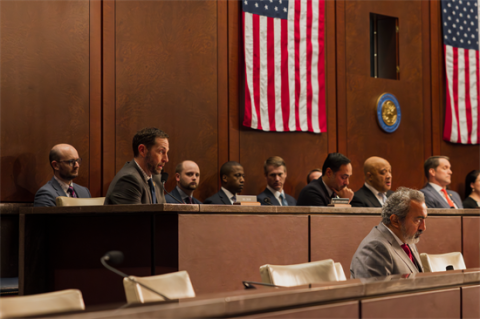
WASHINGTON — Congressman Jason Crow (D-CO), a former Army Ranger and Member of the House Permanent Select Committee on Intelligence, pressed top Trump intelligence and national security officials over the rationale behind the President’s war of choice with Iran. Testifying before the Intelligence Committee at its annual Worldwide Threats hearing were Director of National Intelligence Tulsi Gabbard, Director of the Federal Bureau of Investigation Kash Patel, Director of the Central Intelligence Agency Director John Ratcliffe, Acting Director of the National Security Agency Lt. Gen. William Hartman, and Director of the Defense Intelligence Agency Lt. Gen. James Adams.
During his exchange with Gabbard, Crow pressed the intelligence chief about the radicalism of Iran’s new leader, brought about as a result of Trump’s war. Gabbard agreed that Iran’s new Ayatollah Mojtaba Khamenei is more extreme than his father.
Gabbard also acknowledged under questioning from Crow that it was the U.S. intelligence community’s assessment before the war that Iran did not have intentions to obtain a nuclear weapon. With the new leadership in place, she agreed, their intentions are now unknown.
When pushed by Crow to explain how imminent Iran’s threat to the United States was in the lead-up to Trump’s war, Gabbard failed to provide a clear answer.
Crow has repeatedly condemned Donald Trump’s illegal war of choice in Iran. As an Army Ranger who grew up in a working-class family and served in Iraq and Afghanistan, Crow saw firsthand the repercussions of forever wars on servicemembers and hard-working Americans. He voted to reclaim Congressional authority over war with Iran, and he called for Donald Trump and his cronies to end their military adventurism. Crow has outlined a new vision for American foreign policy that benefits working Americans over the elites and ends unnecessary wars that risk American blood and treasure.
Watch Crow’s full exchange with DNI Gabbard here.
Congressman Crow: Director Gabbard, it is your job and the job of your agency and department to assess the views of Iranian leadership, their policy beliefs, and policy positions, correct?
Director of National Intelligence Gabbard: Yes.
Crow: That includes now-deceased Ali Khamenei of Iran, correct?
Gabbard: Yes.
Crow: And the now-leader, his son Mujtaba Khamenei, correct?
Gabbard: Yes.
Crow: The son is considered more of a hardliner than his father, isn't that correct?
Gabbard: Yes.
Crow: So hardline, that even some of Iran's leaders thought he was too aggressive, isn't that correct?
Gabbard: That is the intelligence community assessment, yes.
Crow: Mojtaba, the son, is particularly close to the brutal Islamic Revolutionary Guard Corps and their most hardline commanders, correct?
Gabbard: That is the intelligence community assessment.
Crow: He was involved in ordering violent crackdowns on Iranian protesters, including their murder, correct?
Gabbard: Yes.
Crow: And we don't know if the son will continue his father's religious ban on developing nuclear weapons. Is that correct?
Gabbard: It's unknown at this time.
Crow: You testified before this committee last year that the elder, now deceased, Khamenei had in 2003, banned the nuclear weapons program, or suspended it, correct?
Gabbard: There was a fatwa in place that stated that.
Crow: And that fatwa remained in place last year when you testified before this committee, correct?
Gabbard: Yes.
Crow: And that fatwa remained in place recently, correct?
Gabbard: As far as I know, it has not been lifted.
Crow: Yeah, you're aware of no information that would lift that fatwa.
Gabbard: I'm not aware of any intelligence reporting that states that. To be clear on Mojtaba, the son who has been named to replace him, it is unclear of his status or his involvement. He was injured very severely through one of the Israeli strikes, and so the decision making is unclear about what's happening in the Iranian leadership.
Crow: So, It's unclear. So we're less certain of the positions of Iranian leadership and their intentions than we were 60 days ago, correct?
Gabbard: That's an accurate assessment.
Crow: One of your jobs is to create products assessing Iran, and the threats it poses to the United States, correct?
Gabbard: Yes.
Crow: And that includes potential outcomes for military action, correct?
Gabbard: It includes potential outcomes of a variety of scenarios.
Crow: And the likelihood of those outcomes?
Gabbard: Yes.
Crow: Generally, when you make assessments about threats facing the United States, you will look at, in Iran, and in any instance, the likely scenarios that have come out of military action, correct?
Gabbard: The intelligence community takes all of those factors into account when they create these assessments.
Crow: When you look at the threats posed by foreign countries, you also assess timelines to those threats, correct?
Gabbard: What do you mean by timelines?
Crow: Like a breakout time, for example, for nuclear weapons or the development of ballistic missiles.
Gabbard: Yes, based on the information available at any given time.
Crow: And the timeline for potential terrorist attacks, correct?
Gabbard: Broadly, yes, assesses all matters available.
Crow: It’s common practice for the IC to assess the timeline of all threats, nuclear weapons development, ballistic, right?
Gabbard: Yes.
Crow: Ballistic weapons development.
Gabbard: Based on the information available, yes.
Crow: Terrorist attacks?
Gabbard: Same applies.
Crow: Cyber attacks, timelines for all of those, correct?
Gabbard: When there is information available that point to that, yes,
Crow: And likelihood, as well as the timeline, correct?
Gabbard: Based on the information available.
Crow: Timing is important, is it not?
Gabbard: It is an important factor that goes into the assessment.
Crow: So it is your position sitting here today that you made no timeline determination as to threats that Iran had facing the United States, correct?
Gabbard: That's a very broad statement, but where the information is available, the intelligence community factors that into their assessment product.
Crow: Did you or the IC make any assessments as to the timing of potential threats facing the United States from Iran in the last 90 days?
Gabbard: I'm sure there was timelines factored into the intelligence assessments that were delivered.
Crow: Did any of them show imminence?
Gabbard: The imminent nature of a threat is determined by the president based on a totality of the intelligence and information provided to him.
Crow: Did any of it show that there were attacks anticipated within the next 90 days from Iran?
Gabbard: It's too simplistic of a statement to say that because it depends on various scenarios occurring or not occurring.
Crow: Did those assessments show timelines for the threats that Iran posed to the United States?
Gabbard: The totality of threats, yes, there were timelines involved where it applied and where that information was available. But again, to your question about the determination of imminence, the president makes that determination based on the totality of information and intelligence.
Crow: The bottom line is there is no imminent threat, and you know that, and there's no product that shows that.
###